Trapped Inside Your Own Aesthetic: The Hidden Cost of a Picture-Perfect Feed
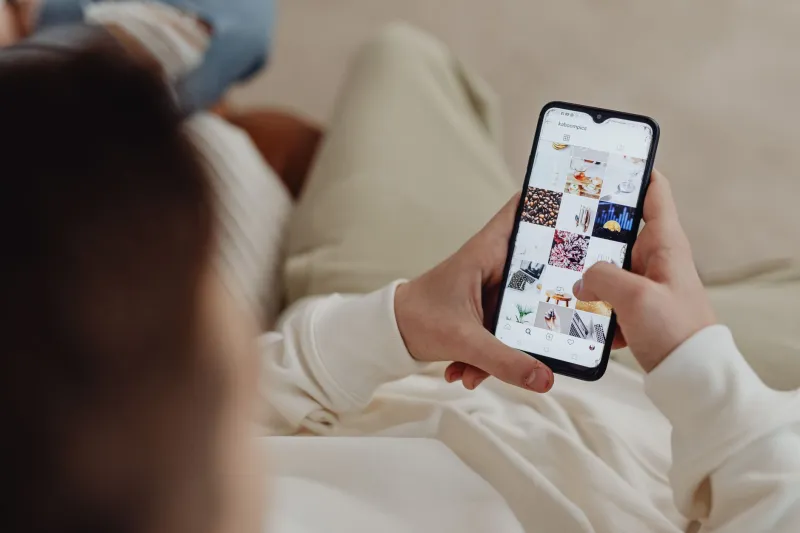
It started innocently enough. Maybe you found a filter you loved, or you noticed that your terracotta-and-sage posts got way more engagement than everything else. So you leaned in. You bought the throw pillows. You rearranged your apartment. You started eating at restaurants based on whether the lighting matched your palette. And then one Tuesday morning, you sat in your actual, lived-in, slightly chaotic kitchen — dishes in the sink, bad lighting, a hoodie you've worn three days straight — and felt like a stranger in your own life.
Welcome to the aesthetic trap. It's one of the quieter psychological side effects of building a personal brand online, and it's hitting creators of all sizes harder than most people want to admit.
How a Vibe Becomes a Prison
Visual consistency isn't inherently toxic. Knowing your aesthetic helps people recognize your content in a crowded feed, and there's real creative satisfaction in building a cohesive look. But there's a point — and plenty of creators will tell you exactly when they crossed it — where maintaining the look stops feeling like self-expression and starts feeling like a second job with a brutal dress code.
The problem is that aesthetics are static and life is not. Your color palette doesn't know that you're going through a breakup, or that your best friend just moved away, or that you spent last weekend at a fluorescent-lit urgent care instead of a golden-hour picnic. The feed keeps demanding its version of you, and you keep trying to deliver it, and the gap between those two things quietly grows.
Creators describe it as a kind of double life — not in the dramatic, secret-account way, but in a more subtle, grinding sense. You're constantly translating your actual experience into the visual language your audience has come to expect. Messy moments get cropped out. Genuine emotions get filtered down to whatever fits the mood board. Over time, you stop experiencing things directly and start experiencing them as potential content — and then screening that content against your brand.
The Engagement Feedback Loop
Here's the part that makes it so hard to break: the aesthetic works. Consistent, visually cohesive profiles genuinely perform better on most platforms. The algorithm rewards recognizability. Your audience grows because they know what they're getting from you. And so you get paid — in followers, in brand deals, in dopamine — to keep being the curated version of yourself.
That feedback loop is powerful. Every time an on-brand post pops off, you get a little neurological nudge that says this is who you should be. Every time something real and off-palette lands flat, you learn the same lesson in reverse. Gradually, without making any single dramatic decision, you've handed your self-presentation over to engagement metrics.
Some creators talk about a specific moment of reckoning — posting a photo they genuinely loved, something that felt true and alive, and watching it underperform against their usual stuff. The disappointment isn't just about numbers. It's about realizing that the version of you that resonates with your audience might not be the version of you that actually exists.
When the Real World Stops Measuring Up
The psychological disconnect runs in both directions. It's not just that your real life doesn't look like your feed — it's that your feed starts to change how you see your real life.
Researchers who study social comparison have documented this effect for years, but it hits differently when the person you're comparing yourself to is you. You've built a reference point — your own highlight reel — and now you're living in the unedited version. Your actual apartment doesn't look like your grid. Your actual skin doesn't look like your Stories. Your actual Saturday doesn't have that hazy, intentional quality your Saturday posts do.
Some creators describe a creeping dissatisfaction with experiences that used to feel perfectly fine. A meal out with friends becomes subtly disappointing because the restaurant isn't photogenic. A vacation feels incomplete because the weather was gray and nothing matched the travel content you had mentally drafted. You're not fully present in your own life because part of your brain is always running the aesthetic audit.
The Pivot Nobody Talks About
Some creators are starting to push back — not by abandoning their visual identity entirely, but by deliberately introducing friction into it. They'll post something intentionally off-palette, or share a caption that acknowledges the gap between the feed and the reality. Sometimes it's a full pivot toward rawness. More often it's something quieter: a single photo with bad lighting, a Story that's just text, a moment shared without a filter because the moment mattered more than the mood.
The response to these posts is often surprising. Audiences, it turns out, are more perceptive than the algorithm gives them credit for. When something feels genuine — even if it's aesthetically inconsistent — people tend to respond to the humanness of it. Not always with the same raw engagement numbers, but with a different quality of connection. More comments. More DMs. More of the responses that actually make you feel like what you're doing matters.
That's not a guaranteed outcome, and it's not a simple fix. Rebuilding an audience's expectations after you've trained them to expect a certain look takes time and patience and a willingness to watch your metrics wobble. But creators who've done it often describe it as a kind of relief — like finally exhaling after holding your stomach in for a year.
Your Face, Your Mess, Your Call
There's no universal answer here. Some people genuinely love the process of building and maintaining a visual world online, and the curation isn't a burden — it's the art. If your aesthetic is something you're making rather than something that's making you, that's a completely different situation.
But if you've ever looked at your own feed and felt vaguely like you were looking at someone else — someone more put-together, more intentional, more on than you've felt in months — it might be worth asking who that person is actually for.
Your face is on that profile. Your name is on the account. But somewhere between the color grading and the composition rules and the brand guidelines you wrote for yourself, it's worth checking whether you're still actually in there.
Because the most interesting thing about you has never been your palette. It's everything that doesn't fit inside it.