Scroll All the Way Back: What Your Selfie Archive Is Trying to Tell You

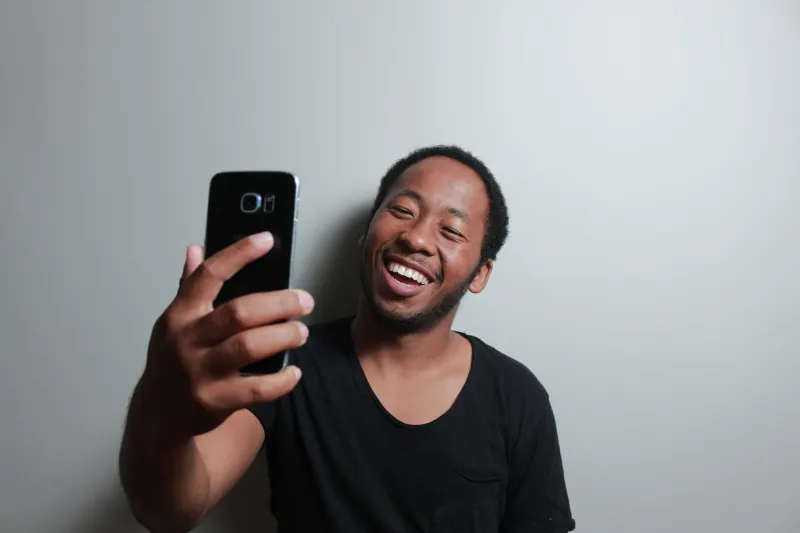
Somewhere on your phone, buried under thousands of screenshots and memes you'll never look at again, is a record of your entire life. Not your highlights reel. Not the curated grid. The actual record — blurry bathroom selfies from 2017, the weird filter phase you went through sophomore year, the six-month stretch where you stopped taking photos of yourself at all.
That archive is doing something. It's just waiting for you to pay attention.
Your Face Has Been Keeping Score
Here's a thing most people don't really sit with: your face changes on camera. Not just because you're aging, though that's part of it. It changes because you change — your confidence, your relationship with your own reflection, the way you decide to take up space in a frame.
Scroll back far enough and you'll probably notice it almost immediately. The angle you used to hold your phone. Whether you were smiling with your teeth or doing that closed-mouth thing. Whether you were centered in the shot or slightly off to one side, like you weren't sure you deserved the whole frame. These aren't random choices. They're clues.
Creators who spend a lot of time thinking about visual identity — photographers, beauty influencers, vloggers who've been at it for years — often talk about rewatching old content as a disorienting experience. Not because they look different (though they do), but because they can feel the difference in how their past self was presenting. There's a confidence gap you can literally see.
The Clothes, The Background, The Vibe
A selfie is never just a face. It's a whole composition of decisions you made, consciously or not.
The clothes you were wearing tell you what you wanted people to think of you. The background — your childhood bedroom, a college dorm, a car, a mirror in someone else's apartment — tells you where you were in your life. Even the lighting you chose (or didn't bother to find) is data. A well-lit selfie means you cared. A dark, grainy one might mean you were going through something and still wanted to document it anyway.
And the filters. Oh, the filters.
Every filter era has its own emotional signature. The heavy-contrast phase. The skin-smoothing phase. The "I discovered a film camera preset and I'm not going back" phase. The sudden pivot to no filter at all, which is its own kind of statement. What were you trying to soften? What were you trying to amplify? What did you want people to see that wasn't quite there yet?
When the Archive Gets Uncomfortable
Not everyone finds this exercise fun. For a lot of people, scrolling back through old selfies hits different — and not always in a good way.
Sometimes you find the version of yourself that was shrinking. The one who was in a relationship that wasn't working, or a job that was hollowing them out, or just a season of life where they stopped recognizing themselves in pictures. You can usually tell. The body language shifts. The smiles get smaller or more performative. The posts get less frequent.
That's not a fun thing to sit with. But it's also genuinely useful information.
Therapists and coaches who work with people on self-image stuff have started talking about photo timelines the way they used to talk about journaling — as a non-verbal record of emotional states that words sometimes can't capture. Your face, your posture, your willingness to be seen at all: these things tell a story your diary might have missed.
The Glow-Up Is Real, But It's Not What You Think
The internet loves a glow-up. Before-and-after content is basically its own genre at this point. But the most interesting glow-ups aren't really about how someone looks — they're about how someone inhabits how they look.
There's a version of scrolling back through your selfies that's just vanity archaeology: look how much better I look now, look how far I've come. That's fine. It's human. But there's a deeper version of this exercise that's less about comparison and more about comprehension.
What were you trying to figure out about yourself back then? Did you get there? And what does your most recent selfie say about where you are right now — not in terms of aesthetics, but in terms of you?
Some people find that question genuinely hard to answer about their present self, even though they can read their past selves pretty clearly. That gap — between how well you can see your old self and how clearly you can see your current one — is worth thinking about.
Building a Visual Language for Yourself
Creators who've been posting consistently for years often describe their archives as something close to a creative portfolio of identity. Not just content — evidence of becoming.
If you treat your photo timeline that way, something shifts. You start to see patterns you didn't notice in the moment: the periods of experimentation, the retreats into sameness, the sudden bursts of trying something new. You can track your relationship with your own face almost like a graph.
And if you're actively creating content — if your face is part of your brand, part of your output, part of how you connect with an audience — that history becomes even more layered. Because you're not just looking at yourself. You're looking at the version of yourself you chose to make public, which is its own fascinating thing.
What Are You Documenting Right Now?
Here's the question the archive eventually asks you: what story are you telling in real time?
Because you're still in it. The selfies you're taking this week are going to be part of someone's scroll-back someday — maybe yours, maybe someone who loves you, maybe an algorithm that decides what "you" means. You're still writing the record.
And maybe that's the most interesting part of all of this. Not what the past photos say about who you were, but what the act of taking them — then and now — says about the ongoing project of being a person who's paying attention to their own life.
Your face has been keeping score this whole time. It might be worth actually reading it.